
Color-field painting represents a unique branch of abstract expressionism focused on simplicity, purity, and color as the primary means of expression. Emerging in the mid-20th century, the style was popularized by artists such as Ad Reinhardt, Mark Rothko, Barnett Newman, and later Morris Louis, Kenneth Noland, and Jules Olitski. This article explores the aesthetic, historical, and philosophical elements of color-field painting and its influence on art history.
The History of Color-Field Painting
Color-field painting developed as a reaction to the dominant gestural and emotionally charged style within abstract expressionism. Artists like Newman and Rothko sought distance from energetic brushwork and instead pursued works where color and form were central. The movement emerged alongside other abstract tendencies such as action painting and hard-edge painting, but it distinguished itself through its focus on large, simple fields of color rather than tonal contrast or expressive marks.
Aesthetic Analysis of Color-Field Painting
In color-field painting, the artwork is not simply an image of something—it becomes an independent object with its own presence. Color and form exist in symbiosis, where figure and ground merge into a unified whole. This creates a visual experience that invites the viewer to immerse themselves in the vibration of colors and the proportions of forms. The works are often large in scale, intensifying this experience and requiring physical presence for full appreciation.
Philosophical Implications
The philosophical dimension of color-field painting touches on questions of perception, existence, and transcendence. By reducing artistic elements to their most essential form, these artists aimed to create a deeper connection between the artwork and the viewer. Rothko famously stated that he wanted to paint “big emotions,” not just big paintings—an expression of the movement’s pursuit of a metaphysical experience through color.
Color-field painting represents an important milestone in the history of modern art. Through its focus on simplicity, purity, and color, it has enriched both the art world and the philosophical dialogue about what art can be. Exploring color-field painting from an aesthetic, historical, and philosophical perspective reveals its deep influence on modern artistic development and its lasting relevance in contemporary culture.
See also: aesthetic.
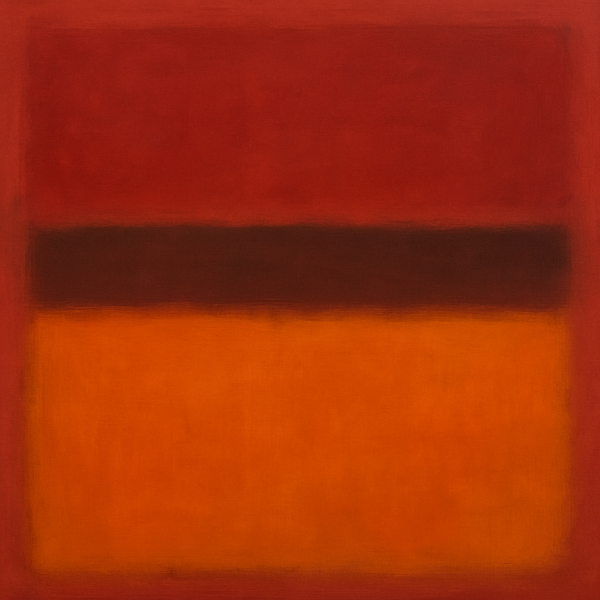
Guide: How to Paint Color-Field Works
Materials
- Canvas or canvas panel
- Acrylic or oil paints
- Wide brush or palette knife
- Palette for mixing colors
- Painter’s tape (optional)
Step 1: Preparation
- Choose a canvas size that fits your vision.
- Work in a well-lit and ventilated space.
- Make sure the canvas is smooth and primed if needed.
Step 2: Planning
- Decide on a color scheme — warm, cool, contrasting, or uniform.
- Think about the composition: one large field of color or layered shapes.
- Sketch lightly or use tape to define areas.
Step 3: Applying Color
- Begin with the largest field of color using a wide brush or palette knife.
- Let each layer dry before applying the next.
- Experiment with thickness, texture, and layering.
- Keep principles of color harmony and contrast in mind.
Step 4: Refining and Detailing
- Add smaller areas or accent colors if needed.
- Use a smaller brush or your fingers for subtle effects.
- Step back regularly to assess balance and overall impact.
Step 5: Finishing
- Allow the painting to dry completely.
- Apply a clear varnish if you want a protective or glossy finish.
- Sign your artwork — and frame it if desired.
Color-field painting is an intuitive process that invites you to explore color, form, and space in a personal and expressive way.