
The history of color pigments goes back to ancient times, when humans began extracting and using natural materials to color their surroundings. Early civilizations such as the Egyptians, Greeks, and Romans used natural pigments like ochre, chalk, and lime to decorate walls, pottery, and textiles.
During the Middle Ages, the trade of pigments became an important profession, as European merchants imported exotic pigments such as ultramarine blue from distant regions like Afghanistan. These pigments were often rare and expensive, making them symbols of status and wealth.
With the Industrial Revolution in the 19th century came the development of chemical dyes, leading to the creation of synthetic pigments that could be mass-produced at a fraction of the cost of natural ones. This revolutionized the art world and made colors more accessible to a wider population.
Types of Pigments
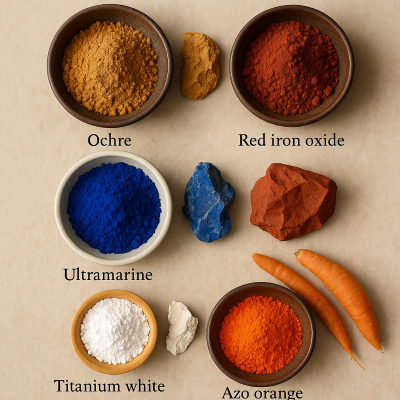
There is a wide variety of pigments used in art, each with its own unique properties and uses. Natural pigments derived from minerals, plants, or animals have been used for thousands of years and include earth tones such as ochre, red iron oxide, and ultramarine blue, which originates from the lapis lazuli stone. These pigments often provide intense, natural colors and a distinctive texture that can influence the appearance of the finished artwork.
Synthetic pigments, on the other hand, are created through chemical processes and are often more versatile and stable than natural pigments. Titanium white, phthalo blue, and azo orange are examples of synthetic pigments found in modern art materials. These pigments allow artists to achieve a broader range of colors and characteristics such as lightfastness and resistance to fading.
Finally, there are modern pigments developed with advanced technology and research. These pigments can have special properties such as fluorescent or phosphorescent (able to emit light after the light source is removed) effects, giving artists the opportunity to experiment with light and color in new ways.
Guide to Mixing Paint from Pigments
Mixing your own colors using pigments gives you full control over your palette and the opportunity to achieve precisely the shades you want. To do so, start by selecting the pigments you want to use. Choose pigments with different colors and characteristics so you can create the tone you’re aiming for. Prepare a clean, organized workspace with all the necessary materials — pigments, binders, a palette, and brushes.
Measure out small amounts of each pigment using a palette knife or small spoon. It’s best to start with small quantities, as it’s easier to add more pigment later than to correct a color that’s too strong. Mix the pigments together carefully on the palette with your knife, gradually adding more of each pigment until you reach the desired tone. Make sure to note the proportions if you want to recreate the color later.
Test your color on a sample surface to ensure it matches your expectations. Adjust if necessary by adding more pigment to darken it, or more binder to lighten it. When finished, clean your palette and tools with water and soap to remove any remaining pigment.
By following these steps, you can create your own paint from pigments and build a unique color palette that matches your artistic vision.