Collage is an art technique where different materials and objects are combined. The reason for making collages doesn’t always have to be artistic. It can also be in the form of vision boards (for example, what one wishes for in the future) or visualizations in the brainstorming phase of projects. This article goes through the artistic technique of collage.
What is a collage?
A collage is an artistic technique where different materials and objects such as images, text, fabric, newspaper clippings, paper, metal, or other objects are assembled on a surface to create a new and unique work of art.
What is the difference between collage and decoupage?
Decoupage and collage are both artistic techniques, but they differ in their approach and process:
Decoupage:
Decoupage is most often used on, for example, furniture, trays, or other utility objects.
Decoupage is a technique where images or cutouts from various sources such as paper, fabric, or even photographs are glued onto a surface, typically wood, glass, or ceramics.
These cutouts are often arranged in a specific pattern or design.
After applying the cutouts, the entire surface is often coated with several layers of varnish or a clear sealant to protect and give a smooth finish.
Decoupage is often considered more structured and planned than collage, as it involves greater precision in arranging the cutouts.
Collage:
Collage is primarily used for artworks or visualizations of projects such as mind boards.
Collage is a freer and more experimental art form, where different materials and objects (such as paper, fabric, photographs, newspapers, packaging, etc.) are glued onto a surface to form a new image or structure.
Collage can be more spontaneous and improvised than decoupage and allows the artist greater freedom to play with textures, shapes, and colors.
There is not necessarily a specific pattern or design, and the final result can be more abstract or surrealistic.
In short, decoupage is more careful and structured in its approach, while collage is more open and experimental. However, both techniques can result in beautiful and interesting works of art, and the choice between them often depends on the artist’s preferences and the desired expression.
Collage – when only the imagination sets the limit
A collage can take many forms and sizes and can be used to create anything from a simple collage with just a few images and text to more complex and detailed artworks filled with different textures and colors.
Collages can be created on paper, canvas, or other surfaces, and there are no limits to what can be used in a collage. It can be anything from personal photographs to old magazine cutouts, which can be combined to create a unique story or artwork.
How to make a collage
Here is a simple step-by-step guide to making a collage:
- Choose a theme or idea you want to work with. It can be a specific theme, colors, or materials you want to use in your collage.
- Collect different materials and objects you want to use in your collage. It can be pictures from magazines, newspapers, photographs, fabric, paper, or other objects you want to include.
- Cut or trim your materials and objects into different shapes and sizes. You can use scissors, a knife, or other tools to achieve the desired shapes.
- Arrange your cut materials on a surface such as a piece of paper or a canvas. You can experiment with different arrangements until you find the desired composition.
- Glue your materials to the surface using glue or double-sided tape. You can also consider using other techniques such as sewing or stapling the materials to the surface.
- Continue building your collage until you are satisfied with the result. You can add more layers and textures if you wish. Between the layers, you can paint with, for example, acrylic, which adheres to most materials.
- Optionally finish with a layer of varnish or other fixative to increase the artwork’s resistance to dirt and humidity.
- Let your collage dry completely and hang it up.
The collage technique is very flexible, and you can experiment with different materials and techniques to create your own unique artwork.
The surrealist art movement and collage
Collages played a major role in the surrealist art movement. Surrealist artists were fascinated by dreams, the subconscious, and the absurd, and the collage technique was a perfect way to express their ideas.
Surrealist collages were often composed of different materials and objects cut out from magazines, newspapers, or other sources. These objects were then arranged on a surface in a way that created a new and surreal context. Surrealist collages were often full of symbolism and absurdities, and they were designed to challenge the viewer’s perception of reality.
Famous Collage Artworks
- The Snail (1953) by Henri Matisse
- Une Semaine de Bonté (1934) by Max Ernst
- René Magritte (1966) “Collage”
- Joan Miró’s Collages
The Snail by Henri Matisse
The Snail (French: L’Escargot) is a famous collage created by the French artist Henri Matisse in 1953. It is a large circular collage measuring 2.5 meters in diameter, exhibited at Tate Modern in London.
The collage consists of colorful paper cutouts arranged on a white background, forming a spiral shape reminiscent of a snail shell. The colors of the paper cutouts harmonize beautifully, creating a calm and balanced atmosphere.
Matisse used a technique he called gouaches découpées (cut gouaches), where he cut colored papers into various shapes and sizes and then arranged them on a surface to create a new artwork.
The Snail is considered one of Matisse’s most famous and iconic works and demonstrates how the collage technique can be used to create a unique and original work of art.
Une Semaine de Bonté by Max Ernst
Max Ernst was one of the most famous artists of the Surrealist movement, known for his surreal collages. One of his most renowned works is Une Semaine de Bonté (loosely translated A Week of Kindness). It is a collage novel and artist’s book by Max Ernst, first published in 1934. It includes 182 images created by cutting up and reorganizing illustrations from Victorian encyclopedias and novels. The work is a collection of cut images of people, animals, and objects arranged to create a dreamlike and surreal narrative.
Collage by René Magritte
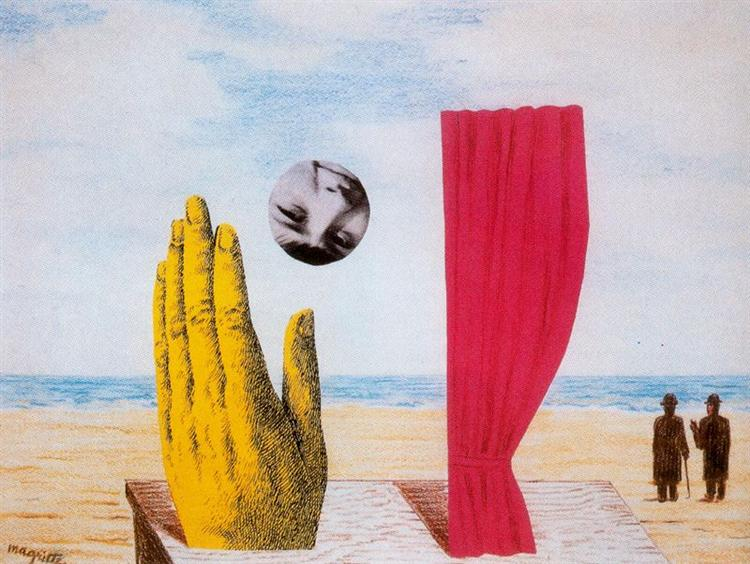
René Magritte’s Collage from 1966 is a surrealist artwork that combines different elements to create an unexpected and fascinating composition. The work is a collage including various materials such as paper cutouts, ink, and pencil.