Decoupage is a creative craft technique that involves decorating objects by applying paper cutouts or images to a surface and then sealing them with a layer of adhesive or varnish. This technique can be used to decorate a wide variety of items, including furniture, trays, chests, picture frames, ceramics, and much more. The word decoupage comes from the French word découper, meaning “to cut out.”
How to Make Decoupage
Follow these steps to get started with your own decoupage project.
Materials You’ll Need
- A surface to work on (e.g., wood, glass, ceramic)
- Cutouts (images, paper, fabric, or photographs)
- Scissors or craft knife for cutting the images
- Glue (decoupage glue or diluted school glue, two parts glue to one part water)
- A brush for applying glue
- Varnish or clear sealer to protect the surface
- Sponge or cloth to smooth out the cutouts
Step-by-Step Guide
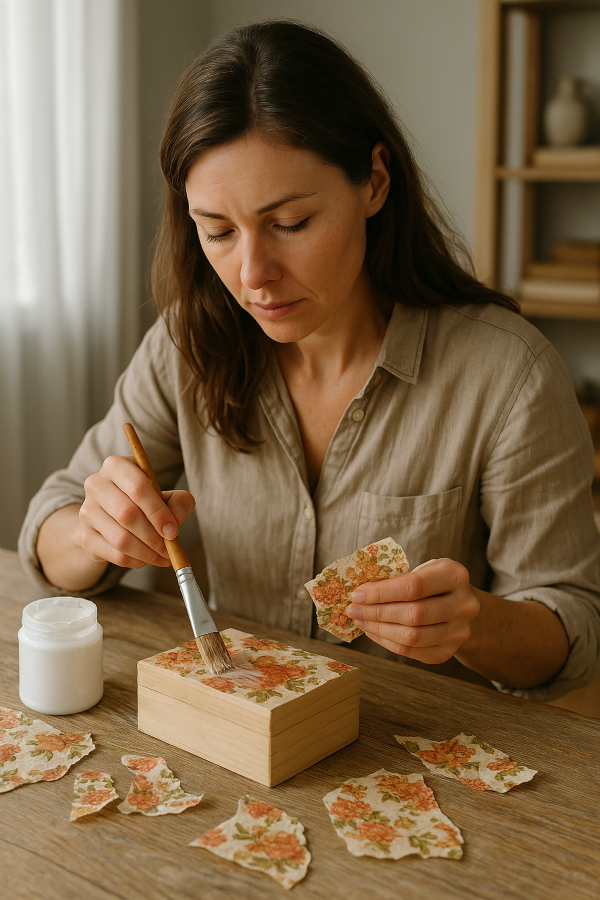
1. Prepare your surface:
Choose your surface and make sure it’s clean and dry. If it’s glossy, lightly sand it so the glue adheres better.
2. Choose your cutouts:
Select the images, papers, or fabrics you’d like to use. Cut or tear them into your desired shapes and sizes. Experiment with different arrangements before gluing them down.
3. Apply glue:
Brush a thin, even layer of glue on the back of each cutout. Place them carefully on your chosen surface and use a sponge or cloth to smooth out air bubbles or wrinkles.
4. Arrange your cutouts:
Continue arranging until you’re satisfied with the final design. You can overlap images or keep them separate depending on your desired style.
5. Let it dry:
Allow your work to dry completely until the glue becomes clear. Drying time depends on the glue type and amount applied.
6. Seal the surface:
When dry, apply several coats of varnish or clear sealer to protect and give a glossy finish. Let each coat dry thoroughly between applications.
7. Enjoy your finished artwork:
Once sealed and dry, your decoupage project is complete! Display your unique creation proudly.
What Can You Use Decoupage For?
Decoupage is a fun and creative way to personalize and beautify objects. Variations include napkin decoupage and 3D decoupage, which uses layered cutouts to add depth and texture.
Here are some ideas for what you can decorate with decoupage:
- Furniture: Refresh old or plain furniture by adding decorative images or patterns.
- Picture frames: Personalize frames with pictures, patterns, or quotes.
- Boxes: Decorate jewelry boxes, storage chests, or keepsake boxes.
- Lanterns: Add colorful motifs to give lanterns a creative touch.
- Serving trays and coasters: Create unique, durable designs sealed with clear varnish.
- Ceramics and porcelain: Apply decoupage to plates, mugs, vases, or figurines.
- Mirrors: Decorate mirror edges to make them stand out as wall décor.
- Shoes and bags: Personalize fashion items with decoupage and a suitable protective finish.
- Scrapbooking: Add layers, textures, and decorative elements to scrapbook pages.
- Glass bottles and jars: Turn bottles and jars into beautiful vases or storage containers.
- Artworks: Create art pieces by decoupaging on panels or canvases, then finish with paint or varnish.
A Brief History of Decoupage
Decoupage has a long history that spans centuries. The technique originated in China in the 12th century, where paper cutting was used for decorative purposes and later spread to Japan.
In the 17th century, decoupage became popular in Europe, particularly in Venice, Italy. It was used to decorate furniture, boxes, and other objects and was regarded as a refined art form.
During the 18th century, decoupage became a fashionable pastime among the European aristocracy and bourgeoisie. It was used to embellish furniture, screens, chests, books, and walls in elegant homes. Madame de Pompadour, the French aristocrat, was famous for her love of decoupage.
In the 19th century, the technique continued to spread throughout Europe and North America, appearing in home décor, furniture, and scrapbooks.
By the 20th century, decoupage experienced a revival as a popular craft. Artists and hobbyists began experimenting with new materials and styles, using it to personalize household objects and artworks.
Read also the article about Collage, and learn the difference between collage and decoupage.