

One of the most remarkable figures in modern sculpture is Louise Nevelson. Her unique style, groundbreaking assemblages, and extraordinary sense of inspiration have left a lasting mark on art history.
Who Was Louise Nevelson?
Louise Nevelson, born Leah Berliavsky in 1899 in Ukraine, was an American sculptor known for her monumental, monochromatic wooden assemblages. She immigrated to the United States in 1905 and studied art in New York. Her early works reflected a search for a personal style, but it was her assemblages that truly established her as one of the most important artists of the 20th century. Her art has inspired many, and here at citer.art we see her as a major source of inspiration in our work with communicating art.
Nevelson’s Unique Style: The Master of Assemblage Art
Nevelson’s style is unmistakable. She is best known for her large, box-like assemblages made of found wooden objects—everything from furniture parts and architectural fragments to everyday items. These objects were collected, arranged, and painted in a single color—most often black, though white and gold also appeared. This monochromatic approach created a sense of unity and harmony among the otherwise diverse elements. Her use of the assemblage technique was revolutionary and expanded the boundaries of what sculpture could be. It’s fascinating how Nevelson managed to transform ordinary objects into extraordinary works of art. Her ability to see beauty and potential in the discarded remains an inspiration to us all.
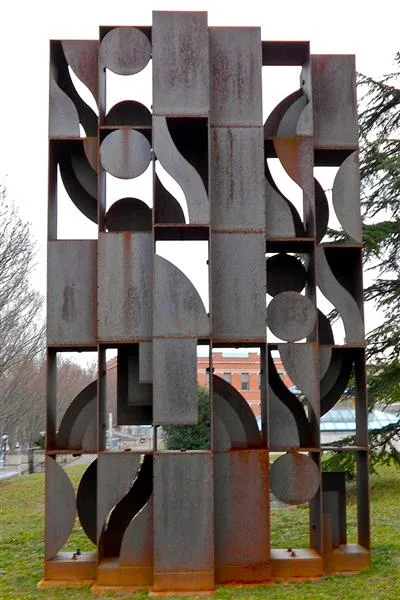
Examples of Nevelson’s Artworks
Below are some examples of Louise Nevelson’s most famous assemblages:
- Sky Cathedral (1958): One of her earliest and most iconic works, consisting of stacked wooden boxes filled with various objects.
- Royal Tide I (1961): A large, gold-painted assemblage that radiates a majestic and mysterious atmosphere.
- Atmosphere and Environment X (1969–70): A monumental installation that envelops the viewer in a world of forms and shadows.
The Power of Sculpture in Nevelson’s Art
Although Nevelson is primarily known for her assemblages, she was also an accomplished sculptor in the traditional sense. Her sculptures, often made of wood and bronze, display the same sense of form and composition as her assemblages. These works highlight her deep understanding of space and materiality. Her approach to sculpture was innovative and challenged conventional ideas of what sculpture could be.
The Inspiration Behind Nevelson’s Art
Nevelson drew inspiration from a wide range of sources, including Cubism, Surrealism, and pre-Columbian art. She was also deeply influenced by her own life experiences—especially her childhood in Ukraine and her later life in New York. Her travels and encounters with different cultures are reflected in her art, which blends multiple styles and traditions. The inspiration behind Louise Nevelson’s art is therefore truly multifaceted. Her influence on modern art cannot be overstated. She was a pioneer of assemblage art and an inspiration to countless artists. Her works are held in some of the world’s leading museums, and she is recognized as one of the most important artists of the 20th century.
Nevelson’s Artistic Development
Nevelson’s artistic journey was long and captivating. She experimented with different styles and techniques before finding her own unique voice. Her early works were marked by a search for identity, but as she developed as an artist, her style grew more confident and distinctive. Her later works are characterized by monumentality and spiritual depth, revealing an artist who had truly found her place in the world. It is fascinating to see how Louise Nevelson’s art, style, sculpture, assemblage, and inspiration evolved over time. From her early experiments to the monumental assemblages that made her famous, there is a clear thread in her work—a fascination with form, material, and transformation.
The Meaning of Assemblage Art
Assemblage art involves bringing together different objects to create a new whole. This technique allows artists to explore new forms of expression and create works that are greater than the sum of their parts. Nevelson was a master of assemblage, using it to produce works that are both beautiful and thought-provoking. Assemblage art challenges our perception of what art can be and opens new ways of seeing the world.
Louise Nevelson and the Role of Color
Although Nevelson is known for her monochromatic works, color played an important role in her art. Her color choices were deliberate, each meant to evoke a specific mood or atmosphere. Black, white, and gold were her preferred colors, each with its own symbolic meaning:
Black symbolized mystery, infinity, and the subconscious.
White represented purity, clarity, and spirituality.
Gold symbolized wealth, power, and the divine.
Her use of color added another dimension to her works and enhanced their emotional impact.
Frequently Asked Questions about Louise Nevelson
She is best known for her large, monochromatic wooden assemblages made from found objects. Her unique style and innovative use of the assemblage technique made her one of the most important artists of the 20th century.
Assemblage art involves assembling different objects into a new whole. It is a three-dimensional art form in which objects are collected and arranged in space.
Nevelson drew inspiration from Cubism, Surrealism, pre-Columbian art, and her own life experiences.
For Nevelson, black symbolized mystery, infinity, and the subconscious. She used black to create unity and harmony in her assemblages. Read more about color theory.
Her legacy lies in her groundbreaking art, her inspiration to countless artists, and her contribution to modern sculpture. She is recognized as one of the most important artists of the 20th century.
