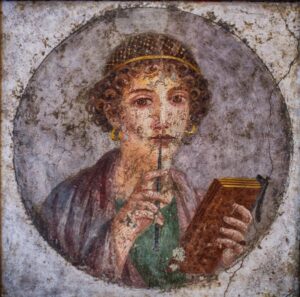

In naturalistic literature and art, the focus is often on portraying human life through objective and detailed observation, emphasizing how nature, heredity, and environment shape human destiny. This movement highlights how social conditions, upbringing, and surroundings influence a person’s character and actions. As a result, naturalistic works frequently depict people in difficult or challenging circumstances, creating depth in the characters’ complexity and in the portrayal of their struggles.
What Is Naturalism?
Naturalism is a literary and artistic movement that emerged in the second half of the 19th century and continued to influence the early 20th century. It developed as an extension of realism and emphasized a close connection to science and the observation of human behavior. Naturalist writers and artists aimed to depict life as accurately and objectively as possible, grounded in empirical observation.
Naturalistic Art
Naturalistic art is a style or approach within the visual arts that strives to depict objects and subjects as they appear in reality. Unlike more abstract or stylized approaches, naturalistic art seeks to present the world as accurately and faithfully as possible.
This often involves careful attention to detail and precision in rendering form, color, light, and shadow. Artists aim to capture everyday scenes and portray people, landscapes, animals, and objects with a high degree of realism.
Naturalism in art can be seen as a reaction against more idealized or stylized forms of representation. It can be traced through multiple periods of art history—from Renaissance masters such as Leonardo da Vinci and Jan van Eyck to 19th-century realists like Gustave Courbet and Édouard Manet. Naturalistic tendencies have appeared across artistic movements whenever artists pursued truthful, unembellished depictions of reality.
Key Characteristics of Naturalistic Art
Naturalistic art is defined by several qualities that together create a realistic representation of the subject. The most important characteristics include:
- Realism: Naturalistic art strives to depict the world as accurately as possible, with great attention to detail and precision.
- Accuracy of form: Forms follow natural proportions and anatomical or structural correctness.
- Correct light and shadow: Artists pay close attention to the effects of light, using shadows and reflections to create depth and spatial realism.
- True-to-life color: Colors are typically realistic and carefully matched to the observed subject, creating mood while remaining faithful to visual reality.
- Focus on everyday life: Naturalistic art often portrays scenes from daily life, people in ordinary surroundings, and landscapes or natural environments.
- Objectivity: Naturalistic artists aim to be objective observers, depicting subjects without emotional distortion or personal bias.
Together, these characteristics create artworks that give the viewer a sense of being present in the depicted moment, capturing the details and beauty of the natural world.
Naturalism and the Modern Breakthrough
Naturalism played a significant role in the Modern Breakthrough, a literary movement that emerged in Scandinavia in the late 19th century. The Modern Breakthrough sought to challenge traditional literary forms and explore new themes and techniques. As part of this movement, naturalism emphasized a realistic and objective portrayal of human life, focusing on how heredity, environment, and social conditions shape people’s experiences and destinies.
Writers across Scandinavia played a key role in shaping naturalism and what became known as the Modern Breakthrough. Among the most influential were Henrik Ibsen, whose realistic plays confronted social hypocrisy, and Danish author Herman Bang, known for his psychologically detailed novels about everyday life. Like their European contemporaries—such as Émile Zola in France or Thomas Hardy in England—they challenged traditional storytelling by addressing subjects like gender roles, class inequality, and social expectations, which made their work groundbreaking and often controversial.
The Modern Breakthrough, guided by naturalistic principles, contributed to a radical shift in Scandinavian literature, opening the door to more direct, realistic representations of human experience and social realities.