
A mandala is a circular pattern that grows outward from a center in perfect symmetry. For more than two thousand years, mandalas have been used in Hindu and Buddhist meditation. Today millions of people color them to relax and focus. On this page you can create your own mandala with our free mandala maker, print six new coloring pages, or download a coloring book with 51 mandala drawings. No email or sign-up is needed.
Make Your Own Mandala Online
Click New mandala to get a fresh design, choose a color and click any shape to fill it. With “Color all matching shapes” switched on, every matching petal or circle around the ring fills at once. Switch to Draw to add your own lines: everything you draw is mirrored around the center automatically. When you are happy, download the result as a JPG or print it.
- Symmetry sets how many times your lines repeat around the circle. Try 6 for a flower, 12 or 16 for fine lace.
- Mirror reflects each line as well as rotating it, which gives the classic kaleidoscope look.
- Blank canvas starts an empty circle, so you can draw a mandala completely from scratch and then color it.
- Undo steps back if a color or a line went wrong.
Free Printable Mandala Coloring Pages
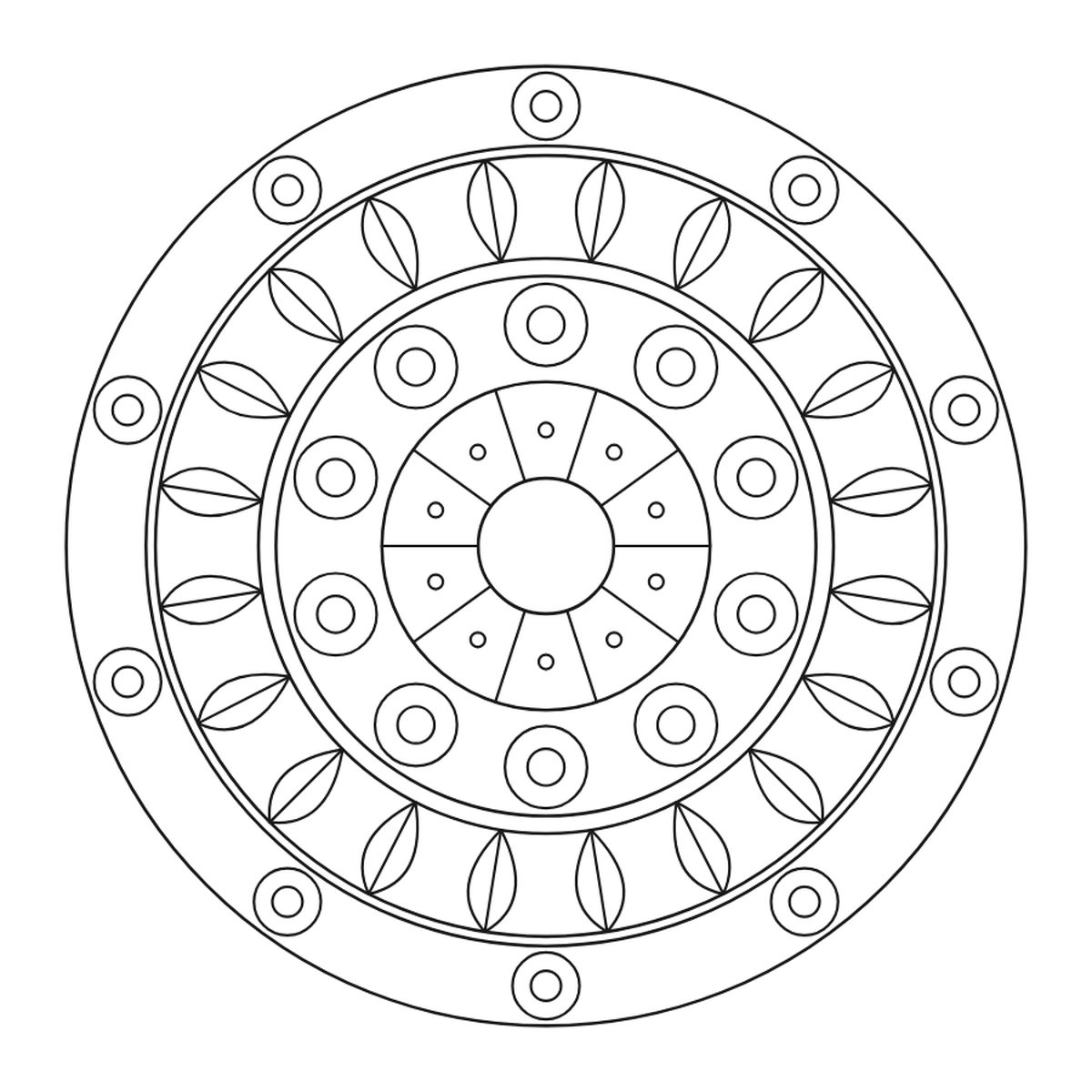
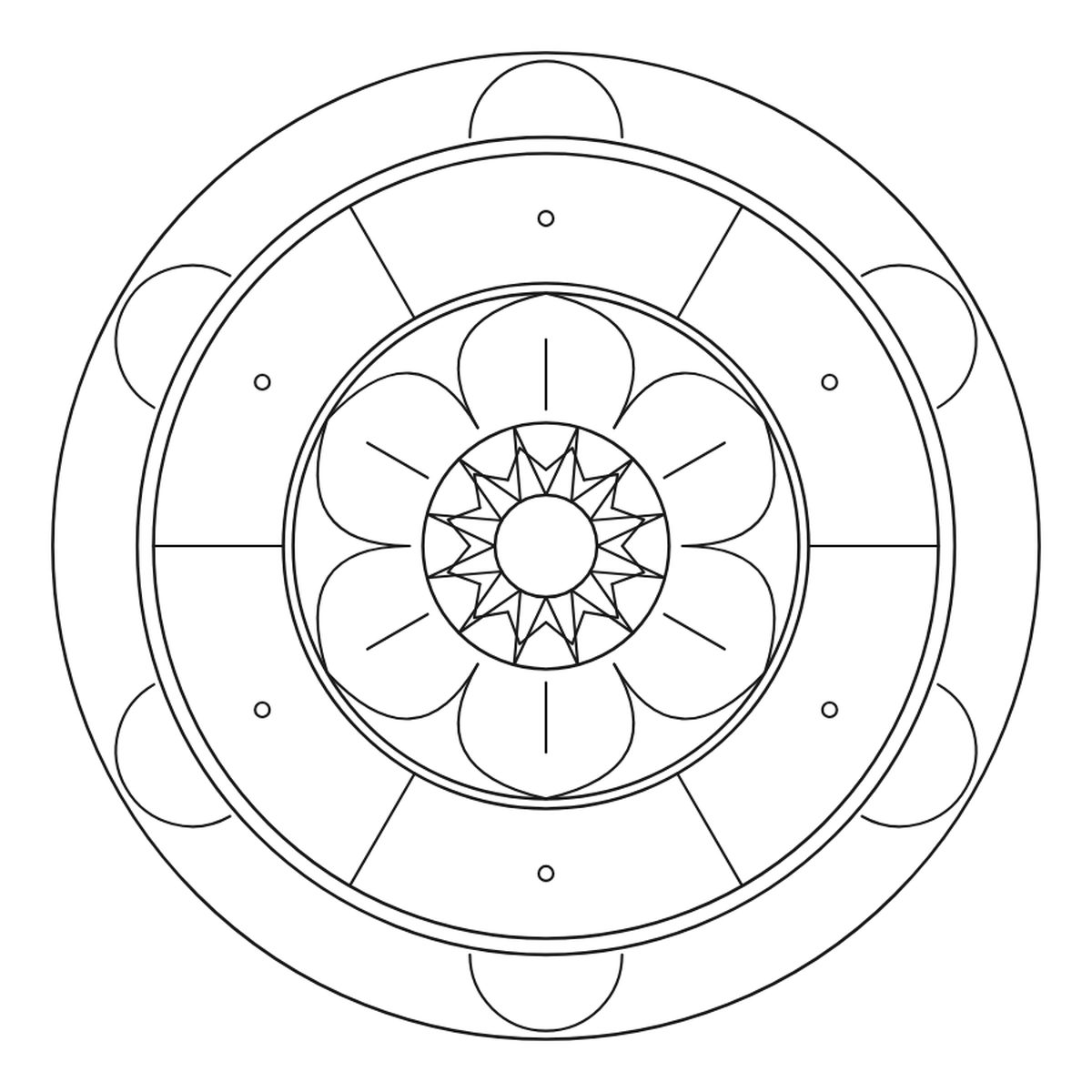
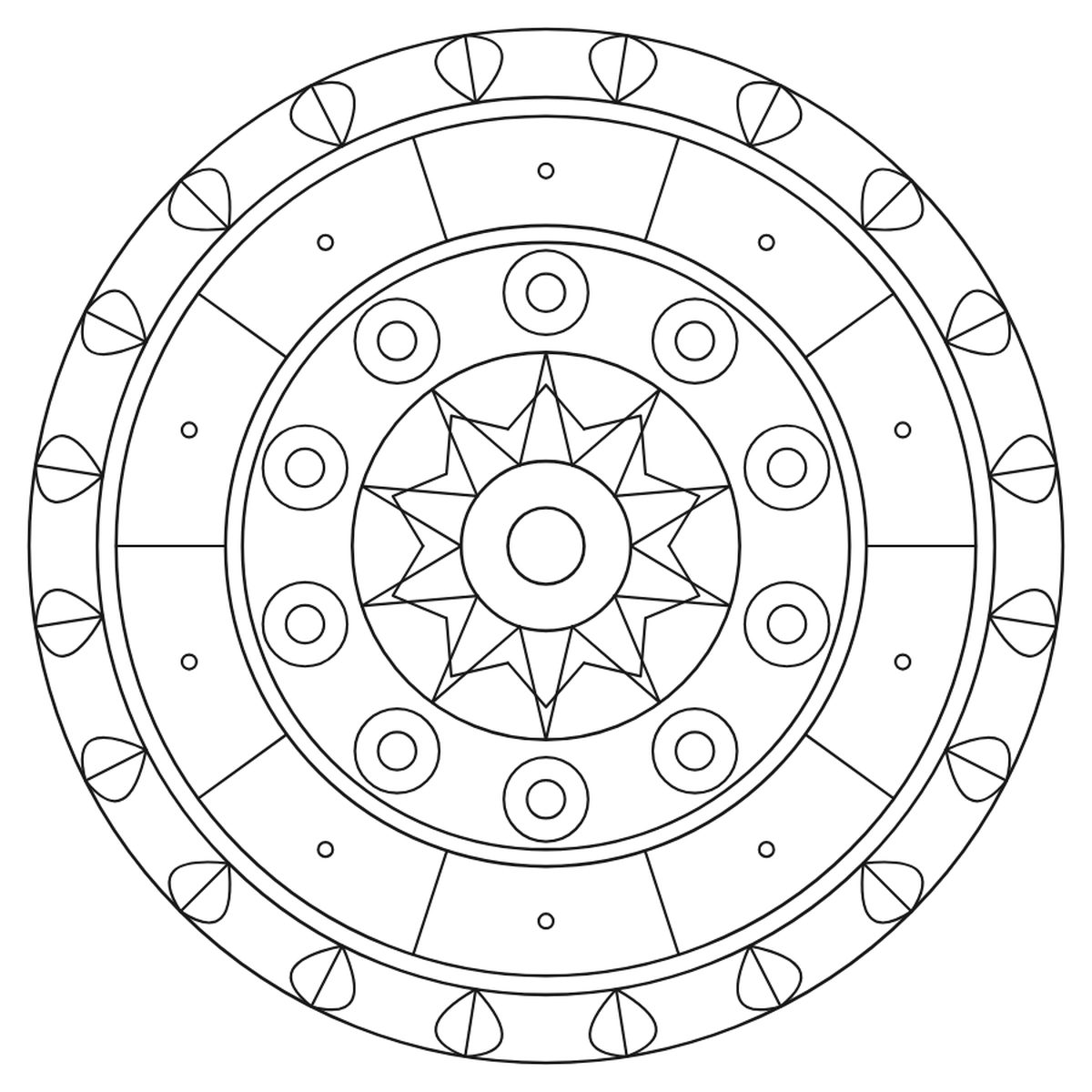
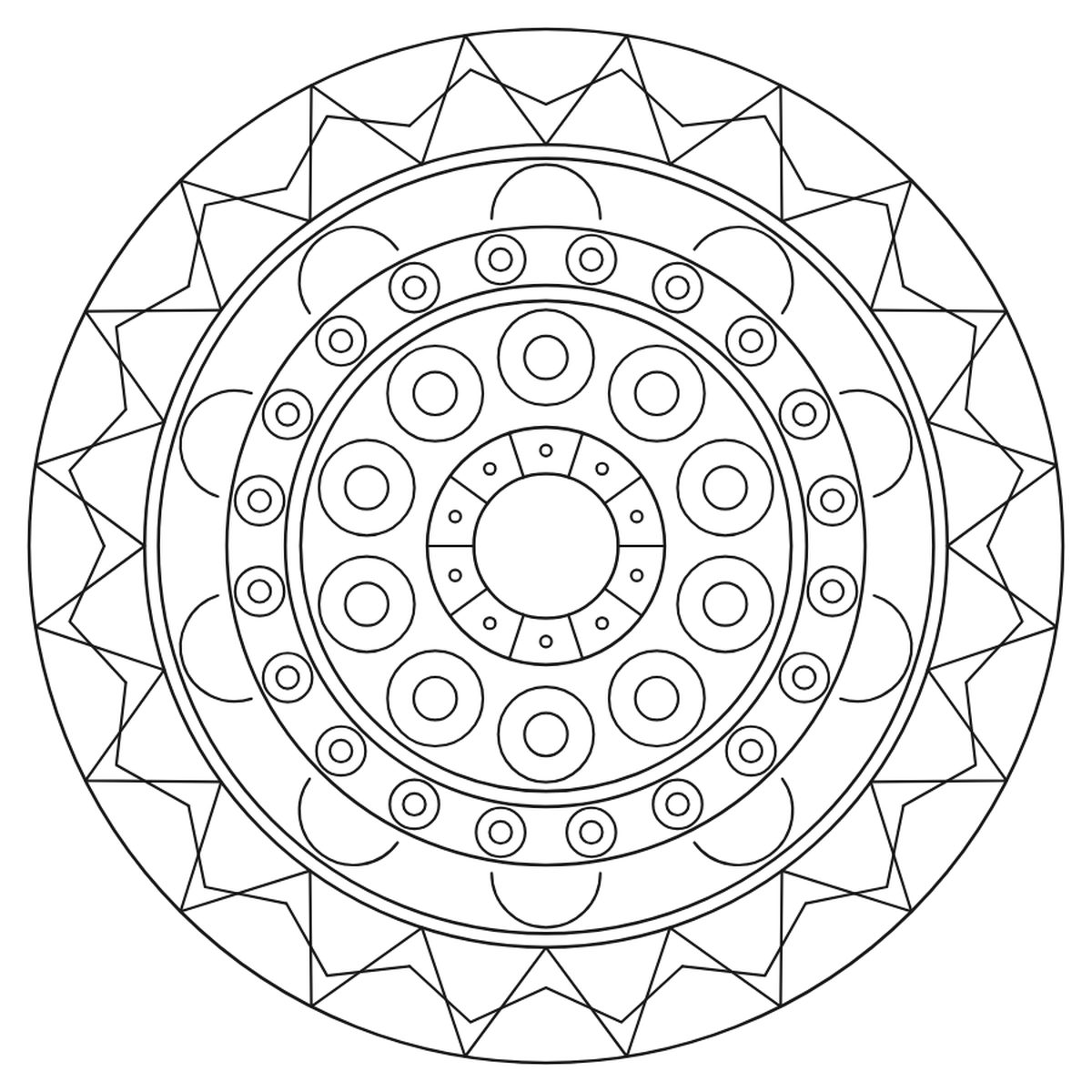
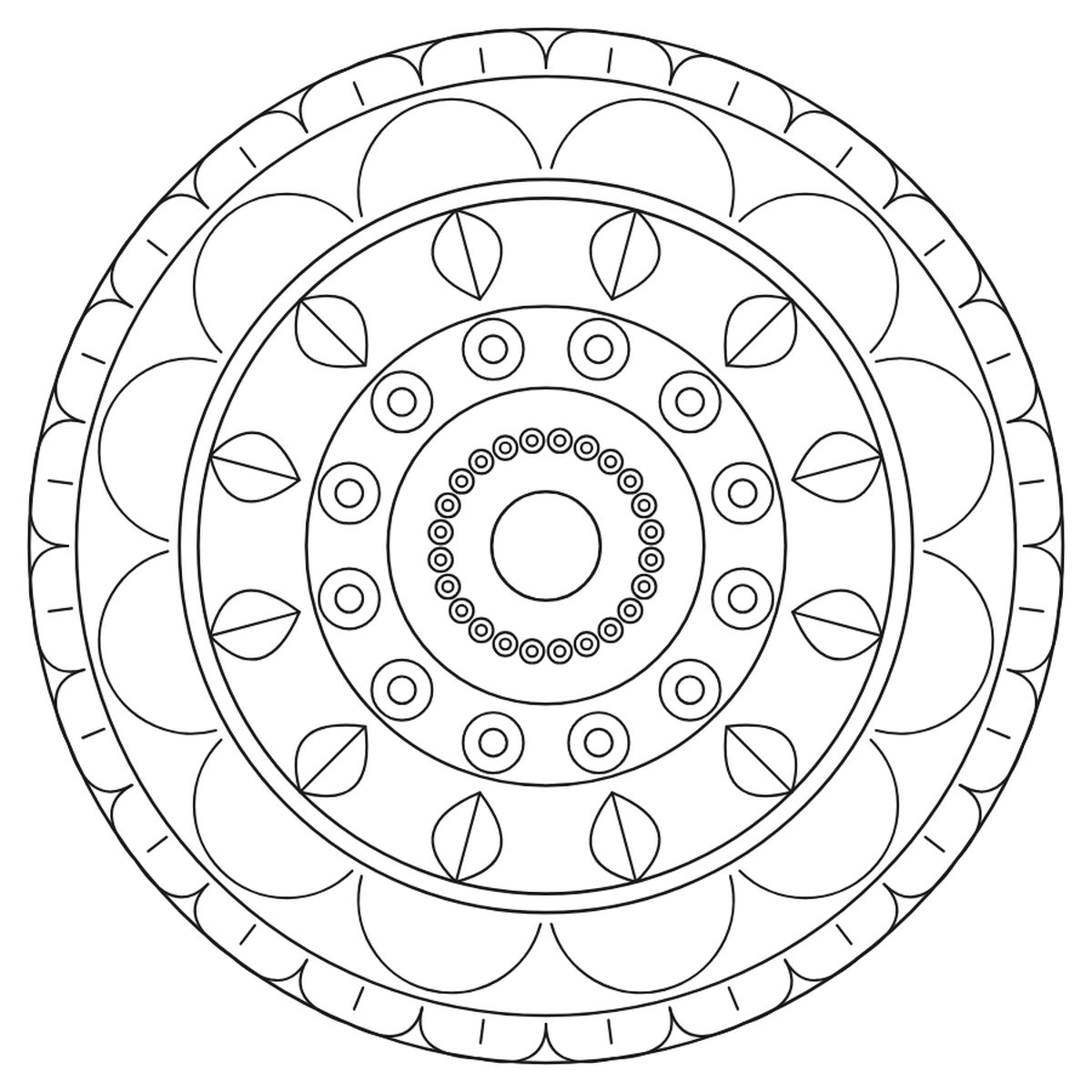
These six mandalas were made for Artschool.nu and are free to print for personal use, at home, in classrooms or in care homes. Click a mandala to open it in full size, then print it or save it.
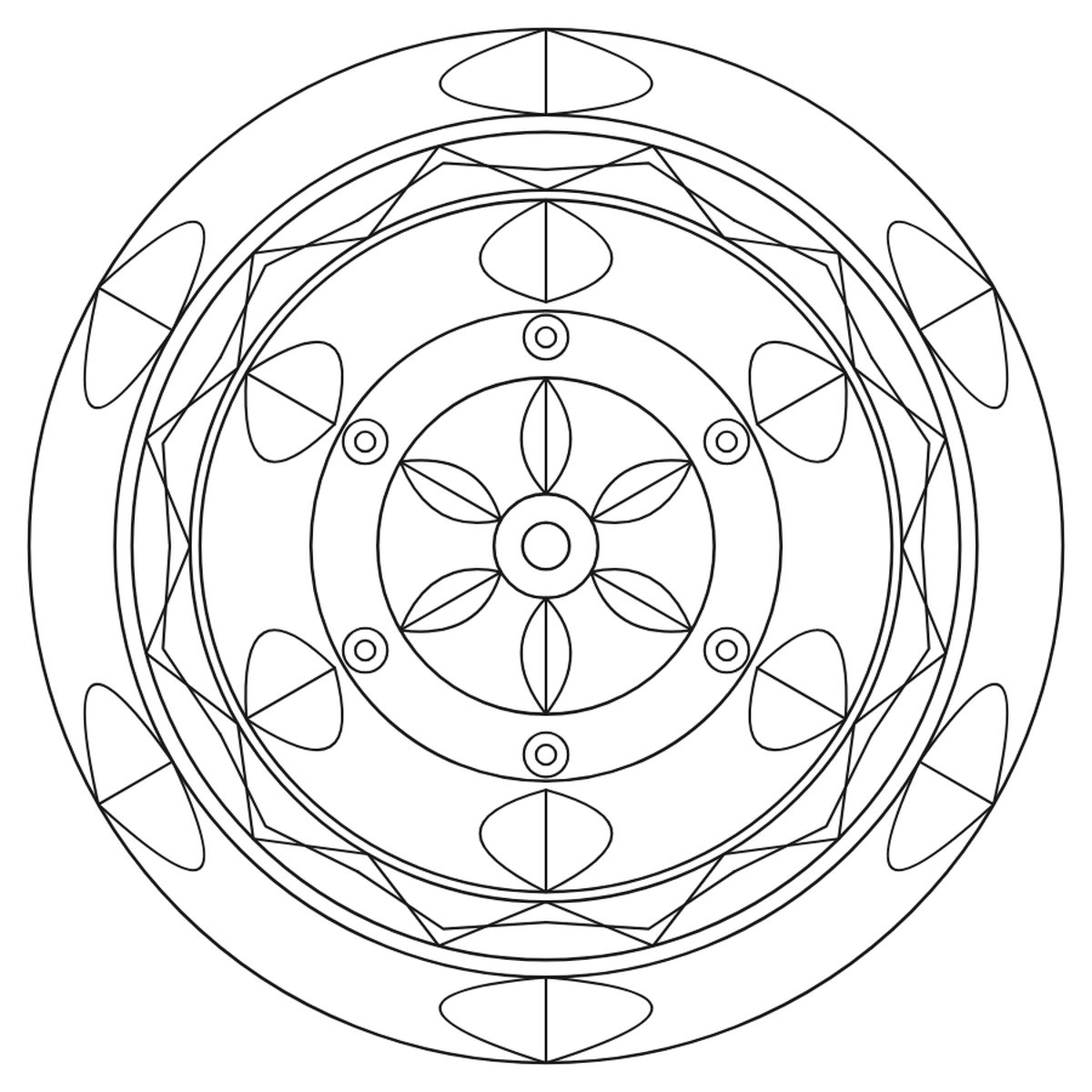
Download the Coloring Book with 51 Mandalas
Want more? Our coloring book contains 51 mandala drawings, from simple designs for children to detailed patterns for adults. Open it as a document and print the pages you like, or download all the drawings at once as a ZIP file.
How to Color a Mandala
- Paper. Ordinary copy paper works for colored pencils and felt-tip pens. For markers or watercolor, use thicker paper of at least 160 g/m², so the color does not soak through.
- Tools. Colored pencils give soft shading, fine-liners and felt-tip pens give strong, even color, and watercolor gives a glowing, transparent look.
- Start in the center. Working from the middle outward keeps the pattern balanced and stops you smudging finished areas.
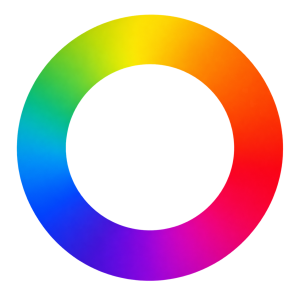
- Choose a color scheme. Pick three or four colors before you begin. Neighbors on the color wheel feel calm, while complementary colors such as blue and orange make the pattern vibrate.
- Repeat colors in rings. Giving every matching shape in a ring the same color makes the symmetry shine.
What Does Mandala Mean?
The word comes from Sanskrit, the classical language of India, where maṇḍala means “circle”. In Hinduism and Buddhism, a mandala is far more than a pretty pattern. It is a symbolic map of the universe, with a sacred center surrounded by layers of walls, gates and protective circles. Monks and practitioners use mandalas as a focus for meditation, moving in their minds from the outer edge toward the center.
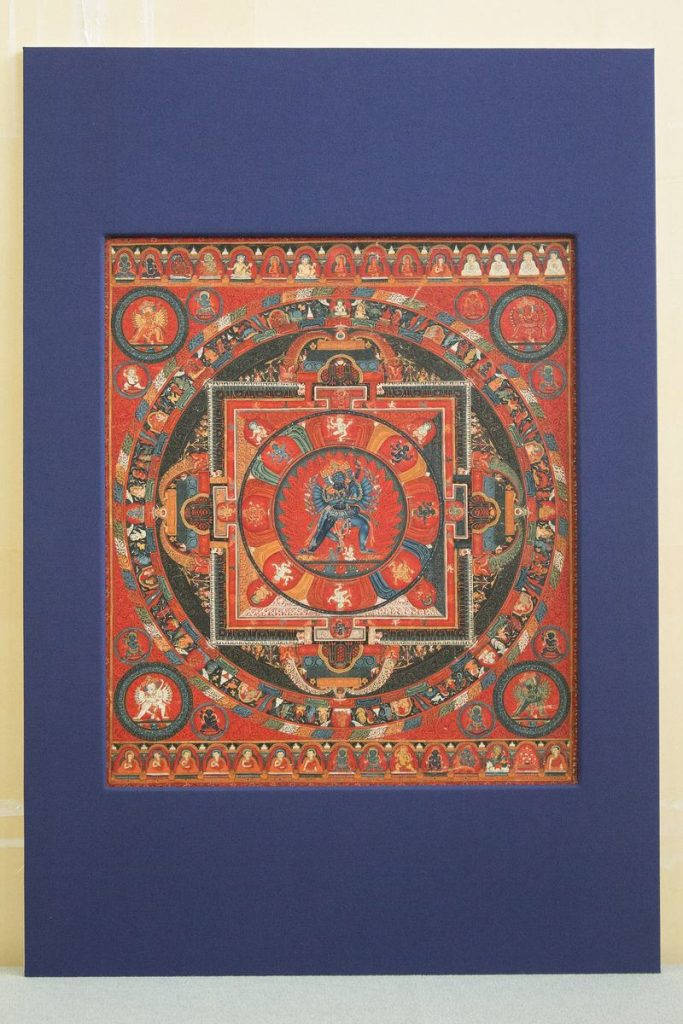
Tibetan Buddhist mandalas are often painted on cloth scrolls called thangkas. The square in the middle represents a palace with four gates, one in each direction, and the deity at the center is surrounded by attendants, symbols and rings of flames.
Sand Mandalas
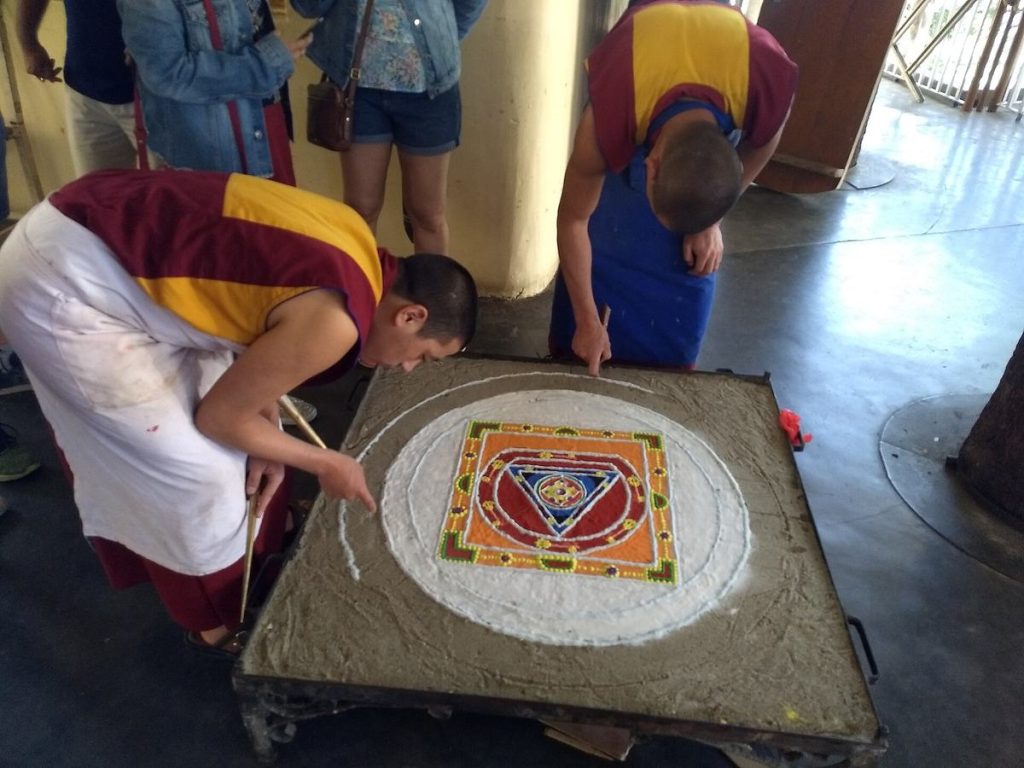
The most remarkable mandalas are made of colored sand. Tibetan monks spend days or weeks pouring millions of grains through thin metal funnels to build an intricate design. When it is finished, the mandala is ceremonially swept away and the sand is poured into a river, a reminder that nothing lasts.
Mandalas in the West
Circular designs with a strong center appear in many cultures, from the rose windows of Gothic cathedrals to Navajo sandpaintings. In the early 20th century the Swiss psychiatrist Carl Gustav Jung drew a mandala almost every day for a period and came to see the form as an image of the whole self. His ideas helped make mandalas popular in art therapy, and a 2005 study suggested that coloring a mandala can reduce anxiety more than coloring a blank page.
How to Draw a Mandala by Hand
- Draw the rings. Use a compass to draw five or more circles of different sizes around the same center point.
- Divide the circle. With a ruler and a protractor, draw straight lines through the center every 30 or 45 degrees, so the rings are split into equal sections.
- Fill the sections. Draw one simple shape, such as a petal, a dot or a triangle, in a section and repeat it in every section of that ring.
- Build outward. Give each ring a new shape, alternating round and pointed forms for contrast.
- Ink and erase. Go over the lines you want to keep with a fine-liner, wait for the ink to dry and erase the pencil guides.
Make a few copies of your drawing before you color it, so you can try different color schemes. You can also paint mandalas on stones, plates or walls, using the same method.
How to Pronounce Mandala
In English, mandala is usually pronounced MAN-da-la, with the stress on the first syllable. In Sanskrit the first vowel is closer to a short “u”, as in MUN-da-la.