

For some years now, it has been highly popular to “paint” using liquid acrylic paint, and it’s indeed a fun technique that anyone can engage in.
Liquid acrylic paint, also known as “fluid paint” or “pouring art,” is a popular painting technique where the paint is thinned and poured over a surface to create intriguing patterns and effects. If you desire to work with bubbles and cells in the paint, you can add silicone oil to the paint, but it’s also possible to create personal artwork without it.
Materials
To start creating fluid paint art, you should first gather the following materials:
- Acrylic paint in various colors. The acrylic paint you typically use for art is excellent for this purpose.
- Pouring medium (liquid medium) such as Liquitex to dilute the acrylic paint
- Silicone oil (if you want cells) See separate section on silicone oil below
- Spoons or sticks for mixing paint
- Disposable cups or similar containers for mixing and pouring paint
- A surface to paint on (e.g., canvas, wooden panel, or paper)
- Gloves
- A tray to catch excess paint
- A brick, some blocks, or another “pedestal” to elevate the artwork, allowing it to drip without sticking
- Plastic sheet or other protection for your surroundings
- Apron
- A heat gun or a torch (if using silicone oil)
- Painters tape can be used to mask areas you don’t want paint on
Step-by-Step Guide to Liquid Acrylic Paint
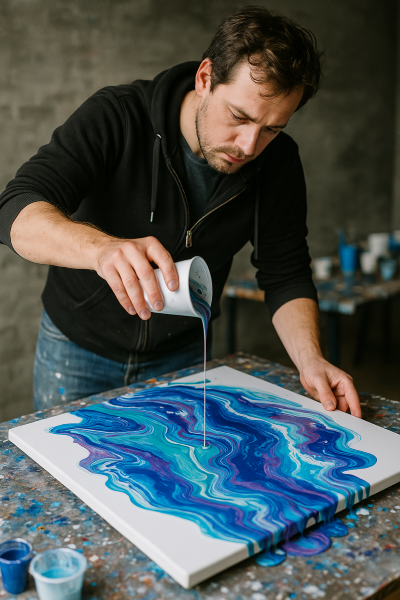
Step 1: Cover the area you’ll work on with, for example, a plastic sheet, painter’s tape, etc. This type of creative play can get messy. Place your canvas or surface on, for instance, a brick in a tray to elevate it from the table.
Step 2: Prepare the paint Begin by pouring a bit of each color of acrylic paint into separate plastic cups or containers. Then, add a small amount of medium to each cup and mix well using a spoon or stirring stick. The amount of medium depends on the desired paint consistency, but a good rule of thumb is to use one part medium to two parts paint.
Step 3: Mix the colors Once each color is prepared, you can begin mixing them together to create interesting patterns and color combinations. You can mix the colors in separate cups and then pour them onto the surface, or you can pour the colors directly onto the surface and mix them there. Use a spoon or stirring stick to gently mix the colors together to avoid over-mixing and creating a uniform blend.
Step 4: Pour the paint Once you’ve achieved the desired color and consistency of the paint, it’s time to pour it over the surface. Pour the paint slowly and evenly across the surface, allowing it to spread and flow naturally. You can adjust the amount of paint and the direction of the pour to create various patterns and effects.
Step 5: Create patterns Use a stirring stick, a brush, or your hands to create patterns and movement in the paint. Gently move the colors around on the surface to create different patterns and effects. You can also tilt the surface to make the paint flow in different directions.
Step 6: Let it dry After achieving the desired effect, let the paint dry for at least 24 hours. Once the paint is completely dry, you can add additional details.
Significance of Silicone Oil in Fluid Paint
Silicone oil is a popular addition to liquid acrylic paint, as it can create interesting cells and bubbles in the paint. These cells form due to a difference in density between the colors in the paint, caused by the silicone oil. The number and size of cells depend on the various densities of the colors.
Here’s a description of how you can use silicone oil in your fluid paint art:
Step 1: Prepare materials and tools To use silicone oil in your fluid paint art, you’ll need the following materials and tools:
- Liquid acrylic paint in various colors
- A medium that will help the paint flow and spread
- A surface to paint on (e.g., canvas, wooden panel, or paper)
- Disposable plastic cups or containers
- A mix of spoons or a stirring stick
- Silicone oil (available in various viscosities)
- Torch, heat gun, or similar heat source
- Plastic sheet or something else to protect your work area
- Gloves, optionally, to protect your hands
Step 2: Prepare the paint Start by pouring a bit of each color of acrylic paint into separate plastic cups or containers. Then, add a small amount of medium to each cup and mix well using a spoon or stirring stick. The amount of medium depends on the desired paint consistency, but a good rule of thumb is to use one part medium to two parts paint.
Step 3: Add silicone oil: Now, add a couple of drops of silicone oil to one or more of the colors and gently stir using a spoon or stirring stick. The number of drops of silicone oil depends on the viscosity of the oil and the amount of paint, but a good rule of thumb is to use 2-3 drops per 15ml of paint.
Step 4: Pour the paint: Once each color is prepared, you can start pouring them over the surface. Pour the paint slowly and evenly across the surface, allowing it to spread and flow naturally. You can adjust the amount of paint and the direction of the pour to create various patterns and effects.
Step 5: Create cells: Silicone oil can create cells and bubbles in the paint when it comes into contact with the paint. To create cells, take a drop of silicone oil and drip it over the paint on the surface. Then, use a stirring stick or brush to gently pull through the paint and oil, creating the cells. Repeat this step as needed to achieve the desired effect.
Step 6: Use a heat gun or torch to make the cells emerge and grow. (I’m not entirely sure if this
is due to a difference in density or the product, whether a torch should be used or not. I would.)
Step 7: Let your artwork dry.
“Watercolor” with Liquid Acrylic Paint
Painting “watercolor” with acrylic paint is also an option. In other words, acrylic paint can be used as watercolor if thinned.
Here are some basic steps for applying liquid acrylic paint as watercolor:
- Prepare your paper: Secure watercolor paper on a flat surface using good painter’s tape.
- It might be a good idea to try the technique on a test surface first.
- Thin your acrylic paint: Mix your acrylic paint with water in a ratio of about 1:1. It can vary depending on the desired color intensity and effect. You can also experiment with using different amounts of water to create different effects.
- Apply the paint to the paper: You can use the thinned acrylic paint as watercolor with the help of a brush, sponge, or spray bottle. You can also try dripping the paint onto the surface and letting it spread naturally.
- Create textures and effects: Experiment with different techniques and tools to create textures and effects in your art. For instance, you can use a scraper or toothbrush to create splatters of color, or you can use a wet sponge or dry brush to create structures and lines.
- Let it dry: Once you’re done applying your acrylic paint as watercolor, let it dry completely before adding additional details or layers of paint. If you’re in a hurry, you can use a hairdryer, but be careful not to blow the paint away with the strong wind.
Remember to experiment and have fun with using acrylic paint as watercolor. It’s a creative process that can lead to beautiful and unique results.


