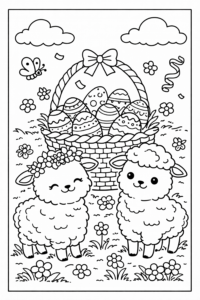
Here you’ll find Easter coloring drawings that can be colored by both children and adults.
Click on the image you want to print to view it in full size.
Easter coloring pages


Easter is rich in symbolism, color, and warm seasonal traditions. From early spring flowers to decorative Easter eggs and the familiar Easter bunny, there are many classic motifs to explore. Drawing Easter-themed images is not only a fun activity—it’s also a way to connect with the season, express creativity, and decorate your home with personal artwork.
Coloring motifs Bold & Easy: Easter


Getting started with Easter drawings
The first step is often the hardest—deciding what to draw. Easter offers many classic motifs that work especially well for drawing. Here are some popular ideas:
Easter eggs: A true classic. Experiment with patterns, colors, and different expressions.
The Easter bunny: Playful, friendly, and full of character. Capture soft fur or lively movement.
Easter chicks: Small and full of life, they are a strong symbol of spring.
Spring flowers: Daffodils, crocuses, and other early blooms make beautiful motifs.
Lambs: Often associated with renewal and gentleness, and well-suited for drawing.
Easter table scenes: Create a cozy illustration of a decorated table with seasonal details.
At ArtSchool.nu, we cover a wide range of topics, including drawing and children’s art, offering inspiration and foundational techniques to help you get started with Easter drawings.
Choosing materials for Easter drawings
The materials you choose depend on your preferred style and experience level. Here are some suggestions:
Pencils: Ideal for sketches and shading. Use different hardness levels (such as HB, 2B, 4B) for varied effects. We have a full page dedicated to pencils.
Colored pencils: Perfect for details and coloring. We recommend brands such as Prismacolor Premier, Faber-Castell Polychromos, and Caran d’Ache Luminance for their high pigment quality. Learn more about colored pencils.
Chalk and pastels: Create soft transitions and atmospheric effects.
Ink and markers: For clean lines and strong color contrast.
Watercolor: Produces light, transparent colors that suit spring themes well.
Paper: Choose paper that matches your materials. Thicker paper works best for wet media like watercolor.
Whether you draw with graphite or colored pencils, experimenting with pressure and technique is essential. Our materials guide offers in-depth insight into your options.
Techniques for Easter drawings
Even experienced artists started with basic techniques. Here are a few that can enhance your Easter drawings:
Contour drawing
Begin by outlining the outer shape of your subject. This helps establish form and placement. Try drawing without lifting the pencil to create a continuous line. We offer a detailed guide to contour drawing to help you master this essential skill.
Shading
Shading adds depth and volume. Observe where light hits your subject and where shadows fall. Vary pressure to achieve different tonal values.
Color theory
Color plays a key role in Easter imagery. Learning color theory helps you understand how colors interact. For example, complementary colors like yellow and purple—often associated with Easter—create vibrant contrast. You can read more about complementary colors on ArtSchool.nu.
| Motif | Recommended colors | Technique focus |
|---|---|---|
| Easter eggs | Pastels, bright colors | Patterns, shading |
| Easter bunny | Brown, gray, white | Soft fur, eyes |
| Easter chick | Yellow, orange | Feathers, beak |
| Daffodil | Yellow, green | Petal details |
| Lamb | White, beige | Wool texture, soft contours |
Easter drawings for all ages
Children and Easter drawings
For young artists, creativity and enjoyment are key. Let children explore freely with color and shape. Simple motifs such as eggs and chicks are ideal starting points. Our children’s art section is full of ideas and tips to support creative development.
A fun activity is printing Easter templates for coloring. Once finished, drawings can be cut out and used as decorations.
Adults and Easter drawings
Adults may choose to explore technique and composition in more depth. Try drawing a still life with Easter decorations and spring flowers, inspired by artists such as Luis Egidio Meléndez, known for capturing texture and form. Work with shading, perspective, and color blending for more refined results.
You might also experiment with the sfumato technique, famously used by Leonardo da Vinci, to create soft transitions. ArtSchool.nu offers lessons on sfumato and other advanced techniques to elevate your drawings.
| Age group | Focus | Tools |
|---|---|---|
| Children (3–6) | Coloring, free play | Colored pencils, markers |
| Children (7–12) | Simple shapes, contours | Pencil, colored pencils |
| Teens | Realistic detail | Shading, perspective |
| Adults | Advanced techniques | Optional, mixed media |
Using Easter drawings as decoration
Finished Easter drawings can be used creatively in many ways:
- Cut out motifs and attach them to Easter eggs
- Hang drawings in windows and let light shine through
- Use small drawings as place cards for Easter meals
- Create handmade Easter cards
- Incorporate drawings into gift wrapping
Sharing your artwork adds a festive and personal touch to your home.
Bring your Easter drawings to life
Easter is a season of renewal, joy, and creativity. Let your Easter drawings reflect that spirit. Whether you prefer simple coloring pages or more ambitious artwork, the most important thing is enjoying the process and letting your imagination flow.
We encourage you to explore our many categories and find inspiration for your next art project—from portraits and landscapes to abstract work and detailed still lifes. Let Easter drawings be the starting point for deeper artistic exploration.
Frequently asked questions about Easter drawings
What are the most popular Easter drawing motifs?
Popular motifs include Easter eggs, bunnies, chicks, spring flowers (especially daffodils), and lambs. These symbolize spring, renewal, and growth.
How can I make my Easter drawings more lively?
Focus on color, shading, and detail. Use bright colors, experiment with shading techniques for depth, and add small details like patterns or textures.
What materials work best for children?
Colored pencils, markers, and watercolor paints are ideal for children. Use sturdy paper that can handle active use.
Can adults enjoy drawing Easter motifs?
Absolutely. Adults often find Easter drawing relaxing and creatively rewarding, especially when exploring advanced techniques or decorative applications.
Are there resources on ArtSchool.nu to help with Easter drawings?
Yes. ArtSchool.nu offers many free resources within drawing, color theory, materials, and children’s art, including articles and videos with practical guidance and inspiration.