What is happening on the NFT art scene in 2026?
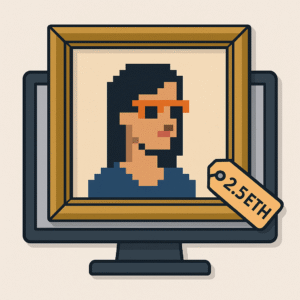
NFT art is no longer just a digital hype phenomenon. After the wild years of million-dollar sales, speculation, and fast-moving trends, the NFT art market in 2026 has become more mature, more critical, and more selective. That does not mean NFT art has disappeared. It means the focus has shifted from pure hype to artistic quality, utility, technology, community, and credible digital ownership.
Here is an overview of the biggest NFT art trends in 2026 that artists, collectors, and curious digital creatives should know.
1. AI art remains one of the biggest NFT trends
AI-generated NFT art is still a major part of the NFT art scene in 2026. Artists use tools such as Midjourney, DALL·E, Runway, and other generative platforms to create images, animations, video works, and hybrid digital pieces. The interesting part is no longer simply that an image was made with artificial intelligence. The real question is how the artist uses AI as a creative tool.
The strongest AI-based NFT artworks are often those with a clear idea, a personal style, or a well-developed concept behind them. As AI-generated images have become common, audiences have also become more critical. A beautiful image is no longer enough. There needs to be an artistic direction, a story, or a distinctive way of using the technology.
2. NFT art is moving away from pure speculation
One of the most important NFT art trends in 2026 is that the market has become more realistic. The years when almost anything could be sold as an NFT simply because the technology was new are over. Many buyers are more cautious, and collectors now pay closer attention to artistic quality, the artist’s history, the surrounding community, and long-term relevance.
This means that NFT artists today need to think more like artists and less like short-term project makers. What is the artwork? Why should it exist as an NFT? What does the collector actually own? And why does this particular work have value?
3. NFTs are used as access, membership, and community tools
NFTs are no longer only about images. In 2026, many artists and digital projects use NFTs as access passes, membership cards, or keys to a community. This is often described as utility NFTs, because the NFT has a function beyond ownership of the token itself.
This could include access to digital art events, courses, private online communities, limited editions, physical exhibitions, live streams, or direct interaction with the artist. For artists, this can be a way to build a more loyal collector base, where the relationship does not end when the artwork is sold.
4. Phygital art is becoming more widespread
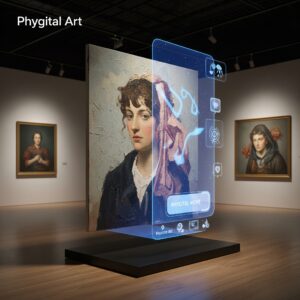
Phygital art is one of the most interesting NFT art trends in 2026. The word combines physical and digital and describes art that exists in both forms.
This could be an NFT connected to a physical painting, a signed print, a sculpture, an installation, or an art object. It could also be a physical artwork where the NFT functions as documentation of ownership, authenticity, or access to additional digital content.
Phygital art makes NFTs easier to understand for collectors who still want a physical connection to the artwork. At the same time, the digital layer makes it possible to add documentation, history, animation, sound, interactivity, or access to the artist’s process.
5. Dynamic and interactive NFT artworks are gaining ground
NFT art does not have to be static. In 2026, there is growing interest in dynamic NFTs that can change over time. The artwork may respond to data, time, weather, user interaction, game environments, or the artist’s ongoing creative development.
This opens up a different kind of art experience, where the NFT is not just an image you own, but a work that evolves. It can feel closer to performance, installation, game art, or digital poetry than to traditional image-based art.
6. Gaming, 3D, and immersive formats influence NFT art
Another clear trend is that NFT art increasingly overlaps with gaming, 3D, AR, and virtual spaces. Artists are working with digital sculptures, avatars, collectibles, virtual exhibitions, and artworks that can be used or experienced inside online worlds.
This means that NFT art is not only about owning a file. It is also about being able to use, display, wear, activate, or experience the work in digital environments. For some artists, the NFT becomes part of a larger universe where image, sound, animation, gaming, and storytelling merge.
7. Brands use NFTs more strategically
Major brands still collaborate with digital artists, but in 2026 these collaborations are often more strategic than before. While many early NFT projects were mainly about quick attention, NFTs are now more often used for loyalty, customer clubs, limited editions, access, and digital identity.
For artists, brand collaborations can offer visibility and financial opportunities. But they also require care. A strong NFT collaboration needs to make sense both artistically and commercially. Otherwise, the work may be seen as marketing disguised as art.
8. Sustainability and blockchain choice still matter
Criticism of the energy consumption associated with NFTs has not disappeared. That is why sustainability is still an important topic in 2026. Many artists choose blockchains and marketplaces that use less energy than the early NFT solutions.
For artists, this is not only a technical issue. It is also about credibility. If you work with digital art, you should be able to explain which platform you use, why you chose it, and how you think about climate impact, fees, ownership, and long-term access to the artwork.
9. Authenticity, rights, and documentation become more important
As AI art and digital copying have become easier, questions about authenticity, copyright, and documentation have become more important. Who created the work? What rights are included? Can the buyer use the image commercially? And where is the actual file stored?
An NFT is not automatically the same as full copyright ownership. In most cases, it works as a digital proof of ownership of a specific token, while the rights to the artwork itself depend on the terms set by the artist or platform. Both artists and buyers should therefore read the conditions carefully.
10. Human expression becomes a countertrend to AI perfection
An interesting countertrend in 2026 is that many collectors and art lovers are looking for more human expression in digital art. When AI can create polished images in seconds, the imperfect, personal, and handmade can become more valuable.
This does not mean that AI art is losing importance. But it does mean that NFT artists with a clear voice, a distinctive visual language, or an honest creative process may stand stronger. In 2026, the question is not only what the technology can do. It is what the artist wants to do with it.
Should you still care about NFT art in 2026?
Yes, but with open eyes. NFT art is no longer the quick gold rush many believed in at the beginning. But the technology is still interesting for artists who work digitally, and for collectors who want documented ownership, access to special communities, or artworks that do not fit into traditional formats.
If you are an artist, do not start with the question: “How do I make money with NFTs?” Start with a better question: “What kind of art do I make, and does it make sense for it to exist as an NFT?”
If you want to learn more, start with our guide on how to get started with NFT art. You can also read more about value and pricing in our article on NFT art pricing.